
Blog
How Long Does a Solar Battery Last
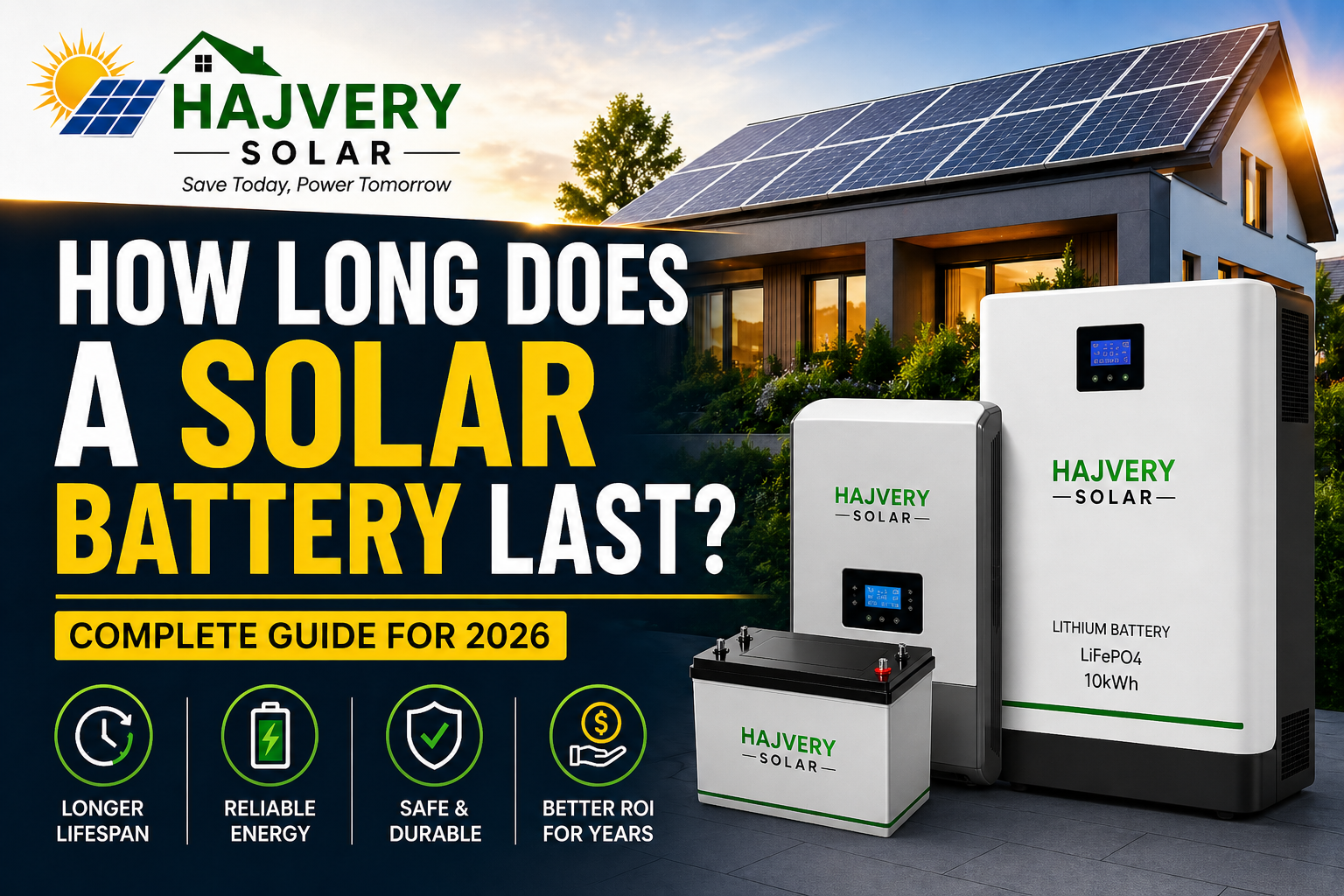
Solar batteries are becoming an essential part of modern solar energy systems, especially for homes and businesses looking to reduce electricity costs and ensure backup power. One of the most common questions people ask is: How long does a solar battery last?
The answer depends on several technical and environmental factors. In this guide, we’ll break it down in a simple, practical way so you can understand real-world battery lifespan, performance expectations, and how to get the most value from your solar investment.
What Is a Solar Battery?
A solar battery is a storage device that saves excess energy generated by solar panels during the day. Instead of sending all unused electricity back to the grid, the battery stores it for later use—especially at night or during power outages.
Modern systems offered by trusted providers like Hajvery Solar are designed to maximize energy efficiency and provide long-term reliability for residential and commercial users in Pakistan.
Average Lifespan of a Solar Battery
On average, a high-quality solar battery lasts:
- Lithium-ion batteries: 10 to 15 years
- Lead-acid batteries: 3 to 7 years
- Lithium iron phosphate (LiFePO4): 12 to 20 years (premium option)
Most modern solar installations today prefer lithium-based batteries due to their longer lifespan, higher efficiency, and lower maintenance needs.
However, lifespan is not fixed—it depends heavily on usage patterns and system quality.
Key Factors That Affect Solar Battery Life
1. Battery Type and Quality
The biggest factor is the type of battery you choose. Lithium batteries generally outperform traditional lead-acid batteries in almost every category, including cycle life and efficiency.
High-quality systems provided by companies like Hajvery Solar ensure you get durable, certified batteries built for long-term use in Pakistan’s climate conditions.
2. Depth of Discharge (DoD)
Depth of discharge refers to how much energy you use before recharging the battery.
- Higher DoD = more usable energy but slightly reduced lifespan over time
- Lower DoD = longer battery life
For example, lithium batteries can safely handle 80–90% discharge, while lead-acid batteries should only be discharged to 50% for optimal life.
3. Charging Cycles
A charging cycle means one full charge and discharge.
- Lithium batteries: 3,000 to 8,000 cycles
- Lead-acid batteries: 500 to 1,500 cycles
The more cycles a battery supports, the longer it will last in real-world use
4. Temperature and Environment
Heat is one of the biggest enemies of solar batteries. In hot regions like Pakistan, proper ventilation and installation matter a lot.
Excessive heat can:
- Reduce battery efficiency
- Shorten lifespan
- Increase degradation rate
That’s why professional installation from experts like Hajvery Solar ensures your system is placed in an optimal environment.
5. Maintenance and Usage Pattern
Proper usage can significantly extend battery life. This includes:
- Avoiding overcharging or deep discharging
- Regular system checks
- Using compatible inverters and charge controllers
Well-designed solar systems require minimal maintenance but still benefit from periodic inspection.
How to Extend the Life of Your Solar Battery
If you want to maximize your investment, follow these practical tips:
✔ Use a Smart Energy Management System
Modern hybrid inverters help regulate charging and discharging efficiently.
✔ Avoid Deep Discharge Frequently
Try to keep battery levels within safe operating limits.
✔ Install in a Cool, Ventilated Area
Temperature control is crucial for long-term performance.
✔ Choose High-Quality Products
Low-cost batteries often degrade faster and cost more in the long run.
✔ Work with Trusted Solar Experts
Professional installation ensures correct configuration and system balance.
This is where Hajvery Solar plays a key role by offering reliable solar solutions, expert installation, and long-term support.
Signs Your Solar Battery Is Aging
Even the best batteries eventually wear out. Here are common signs:
- Reduced backup time
- Longer charging duration
- Frequent power drops
- System inefficiency warnings from inverter
If you notice these issues, it may be time to consider replacement or system upgrade.
Cost vs Lifespan: What Should You Expect?
While lithium batteries cost more upfront, they last significantly longer and require less maintenance.
In contrast:
- Lead-acid batteries are cheaper but need frequent replacement
- Lithium batteries offer better long-term ROI
So, in most cases, investing in a premium system from a reliable provider like Hajvery Solar is more cost-effective over time.
Why Solar Battery Quality Matters in Pakistan
Pakistan faces:
- Frequent load shedding
- High temperatures
- Rising electricity costs
Because of this, a durable solar battery is not just a convenience—it’s a necessity. A well-designed system ensures uninterrupted power for homes, offices, and industries.
Choosing an experienced provider like Hajvery Solar helps you get:
- High-efficiency solar batteries
- Proper system design
- Long-term reliability
- Professional after-sales support
Final Verdict: How Long Does a Solar Battery Really Last?
To summarize:
- Average lifespan: 5 to 15+ years depending on type
- Lithium batteries last significantly longer than traditional ones
- Proper installation and maintenance can greatly extend life
- Environmental conditions also play a major role
If you invest in a high-quality system and professional setup, your solar battery can easily serve you for over a decade.
Conclusion
A solar battery is a long-term investment in energy independence. Its lifespan depends on technology, usage, and installation quality. By choosing reliable solutions and expert guidance, you can maximize performance and reduce long-term costs.
For dependable solar energy systems in Pakistan, Hajvery Solar continues to provide trusted, efficient, and high-performance solutions tailored to modern energy needs.
 Crown
Crown FUJI
FUJI INVENT
 INVT (CHF)
 VEICHI
 EVE
EVE INVEREX