
Blog
Common Solar Inverter Problems & Solutions

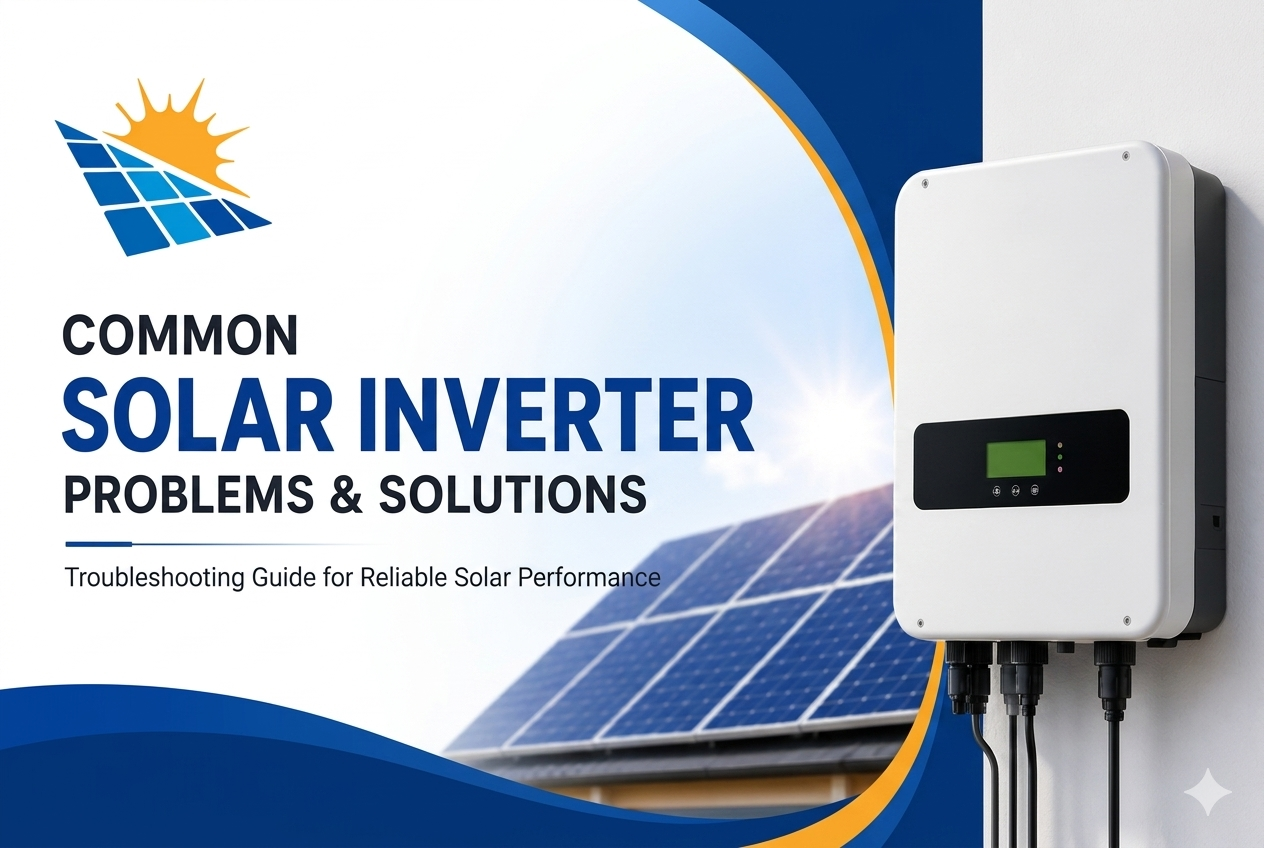
A solar inverter is the heart of any solar power system. It converts DC electricity from solar panels into usable AC electricity for homes and businesses. When the inverter stops working properly, the whole solar system becomes inefficient or may shut down completely.
This guide explains the most common solar inverter problems, their causes, and practical solutions so users can quickly identify issues and keep their solar system running smoothly.
1. Solar Inverter Not Turning On
One of the most common issues is when the inverter does not power up at all.
Possible Causes:
- No DC input from solar panels
- Battery is completely discharged (in hybrid/off-grid systems)
- Loose wiring or tripped DC breaker
- Faulty internal fuse
Solutions:
- Check solar panel output voltage
- Ensure battery is charged above minimum level
- Inspect all DC connections and breakers
- Reset inverter or replace internal fuse if needed
2. Low or No Output Power
Sometimes the inverter turns on but produces very low or no output power.
Possible Causes:
- Weak sunlight or shading on panels
- Faulty MPPT controller
- Overloaded inverter
- Wiring losses or poor cable quality
Solutions:
- Clean solar panels and remove shading
- Reduce connected load
- Check MPPT settings and performance
- Upgrade to proper cable size for reduced losses
3. Inverter Showing Error Codes
Modern solar inverters display error codes for troubleshooting.
Common Reasons:
- Over-voltage or under-voltage
- Grid instability (for on-grid systems)
- Temperature issues
- Internal hardware faults
Solutions:
- Refer to inverter manual for error code meaning
- Stabilize grid input (use stabilizer if needed)
- Improve ventilation around inverter
- Contact authorized technician for hardware issues
4. Battery Charging Problems
In hybrid and off-grid systems, battery charging issues are very common.
Possible Causes:
- Incorrect battery settings in inverter
- Damaged or weak battery
- Faulty charge controller
- Loose battery terminals
Solutions:
- Configure correct battery type (LiFePO4, lead-acid, etc.)
- Test battery health
- Tighten all battery connections
- Replace faulty charge controller if required
5. Inverter Overheating
Overheating can damage internal components and reduce lifespan.
Causes:
- Poor ventilation
- High ambient temperature
- Continuous heavy load
- Dust accumulation inside inverter
Solutions:
- Install inverter in a cool, ventilated area
- Reduce load during peak heat hours
- Clean inverter vents regularly
- Use cooling fans if necessary
6. Frequent Shutdown or Restart
If the inverter keeps turning off and on, it indicates system instability.
Causes:
- Voltage fluctuations
- Overload condition
- Faulty internal circuit
- Weak battery backup
Solutions:
- Stabilize input voltage
- Reduce connected appliances
- Inspect inverter for internal faults
- Replace weak battery if needed
7. No Grid Supply / Grid Fault (On-Grid Systems)
On-grid inverters may stop working if grid issues occur.
Causes:
- Grid voltage out of range
- Frequency instability
- Utility power failure
- Anti-islanding protection triggered
Solutions:
- Wait for grid normalization
- Install voltage stabilizer if required
- Contact electricity provider if issue persists
8. Communication Failure (Smart Inverters)
Some modern inverters connect with apps or monitoring systems.
Causes:
- WiFi/4G module error
- Software glitch
- Weak internet connection
- Firmware outdated
Solutions:
- Restart communication module
- Update inverter firmware
- Reconnect WiFi or replace module
- Ensure stable internet connection
Preventive Maintenance Tips
To avoid most inverter problems:
- Clean inverter and solar panels regularly
- Avoid overloading the system
- Keep firmware updated
- Use proper wiring and protection devices
- Schedule routine professional inspection
Final Thoughts
Most solar inverter problems are not serious and can be fixed with basic troubleshooting. However, ignoring small issues can lead to major system failures. Regular maintenance and correct installation play a key role in ensuring long-term performance.
 Crown
Crown FUJI
FUJI INVENT
 INVT (CHF)
 VEICHI
 EVE
EVE INVEREX