
Blog
3 Phase vs Single Phase Inverters
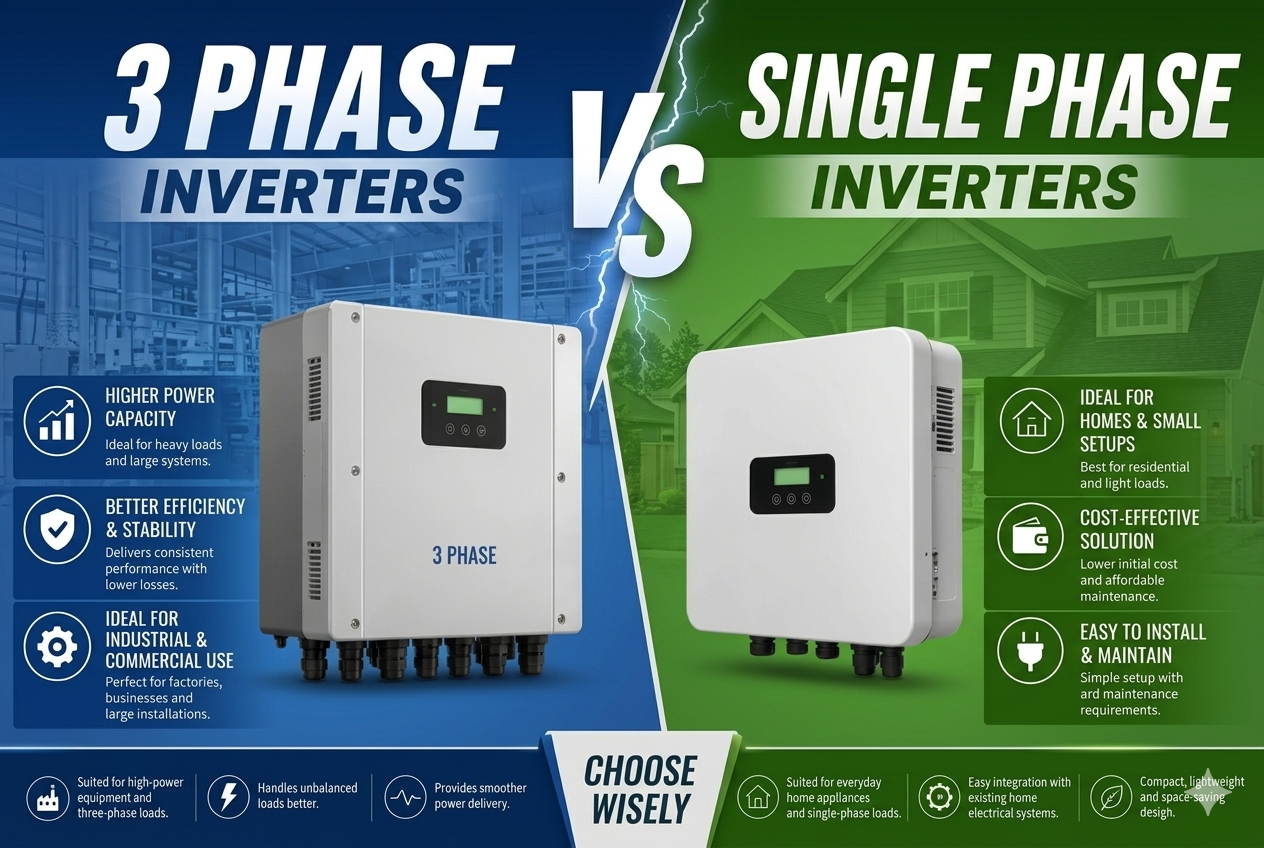
When designing a solar power system, one of the most important decisions is choosing between a 3 Phase inverter and a Single Phase inverter. This choice directly affects performance, efficiency, load handling, and long-term energy savings. Whether you are setting up a home solar system or a large commercial installation, understanding the difference is essential.
In this complete guide, we will explain 3 Phase vs Single Phase Inverters, their working principles, advantages, disadvantages, and which one is best for your needs. This content is brought to you by Hajvery Solar Energy – a top supplier of solar solutions in Pakistan.
What is a Single Phase Inverter?
A single phase inverter converts DC (Direct Current) power from solar panels into AC (Alternating Current) using a single waveform. It is commonly used in residential setups where energy demand is relatively low.
Key Features of Single Phase Inverters:
- Suitable for homes and small shops
- Handles low to medium electrical loads
- Easier and cheaper installation
- Works well with basic appliances like fans, lights, TVs
Advantages:
- Cost-effective solution
- Simple system design
- Easy maintenance
- Ideal for small solar setups
Limitations:
- Not suitable for heavy industrial loads
- Limited capacity
- Can face overload issues in high-demand usage
What is a 3 Phase Inverter?
A 3 phase inverter converts DC power into three alternating currents, which are delivered in three separate waveforms. This system is used for high-power applications where energy demand is significantly higher.
Key Features of 3 Phase Inverters:
- Designed for commercial and industrial use
- Supports heavy machinery and large electrical loads
- Balanced power distribution across three phases
Advantages:
- Higher efficiency and stability
- Can handle heavy loads easily
- Reduced risk of voltage drops
- Ideal for factories, industries, and large buildings
Limitations:
- Higher installation cost
- More complex system setup
- Requires professional maintenance
3 Phase vs Single Phase Inverters – Key Differences
| Feature | Single Phase Inverter | 3 Phase Inverter |
|---|---|---|
| Power Output | Low to Medium | High |
| Usage | Homes, small shops | Industries, commercial buildings |
| Cost | Low | High |
| Efficiency | Moderate | High |
| Load Handling | Limited | Heavy loads |
| Installation | Simple | Complex |
Which One Should You Choose?
The choice between 3 phase and single phase inverters depends on your energy requirements:
- If you are running a household or small business, a single phase inverter is the best option.
- If you are operating a factory, office building, or large commercial setup, a 3 phase inverter is highly recommended.
Choosing the right system ensures better performance, reduced electricity bills, and long-term reliability.
Expert Recommendation from Hajvery Solar Energy
At Hajvery Solar Energy, we recommend analyzing your total load before selecting an inverter. Many users in Pakistan face energy inefficiency because they choose the wrong inverter type.
As a top solar supplier, Hajvery Solar Energy provides:
- High-quality single phase and 3 phase inverters
- Professional solar system consultation
- Affordable and reliable energy solutions
- Complete installation support
Final Thoughts
Understanding 3 Phase vs Single Phase Inverters is crucial for building an efficient solar system. Single phase inverters are perfect for residential use, while 3 phase inverters are designed for heavy-duty commercial and industrial applications.
If you want a reliable, efficient, and cost-effective solar solution, Hajvery Solar Energy is your trusted partner for complete solar energy systems in Pakistan.
 Crown
Crown FUJI
FUJI INVENT
 INVT (CHF)
 VEICHI
 EVE
EVE INVEREX