
Blog
How to Choose the Right Solar Battery for Your System
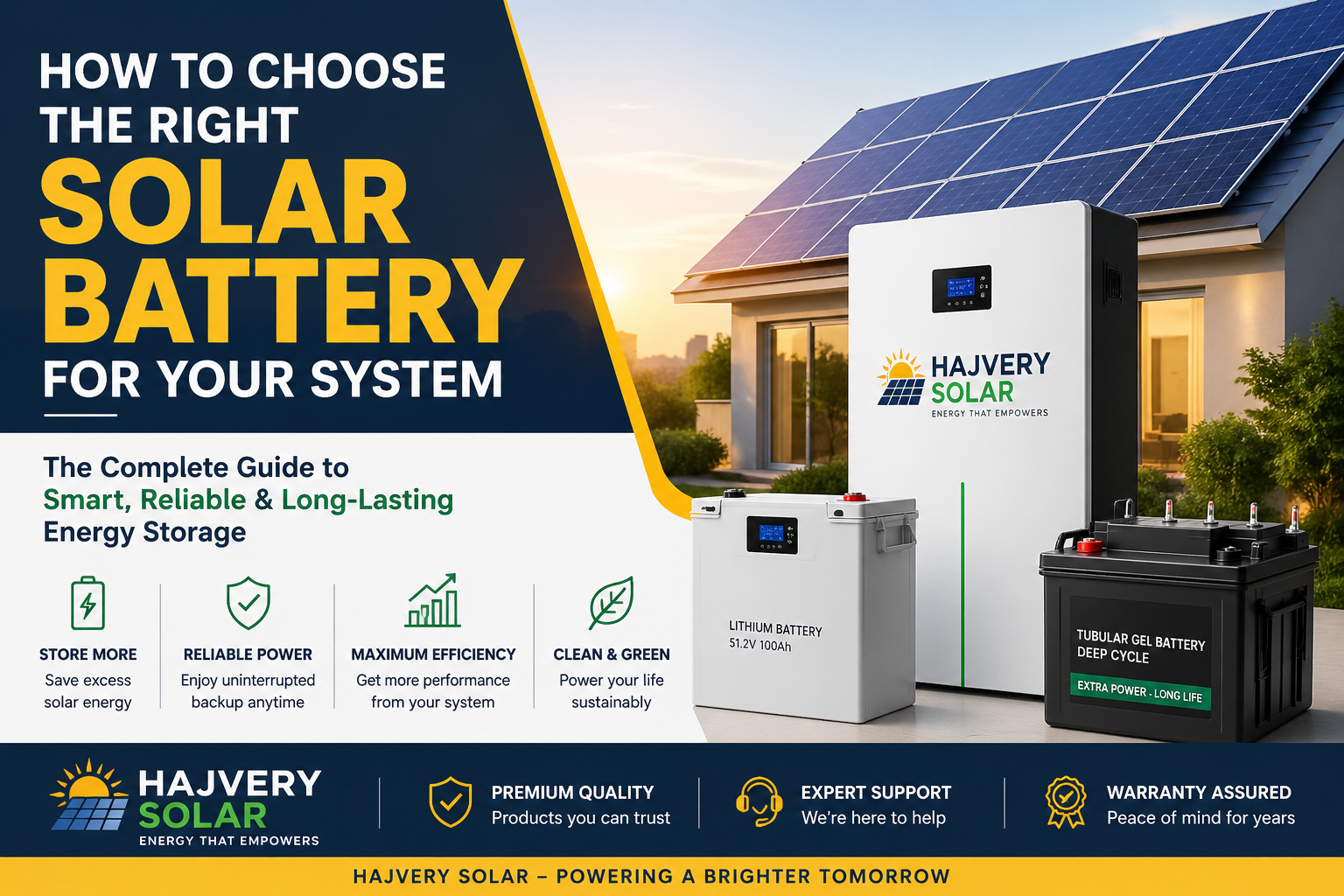
Choosing the right solar battery is one of the most important decisions when setting up a solar energy system. A good battery ensures stable backup power, better energy efficiency, and long-term savings, while the wrong choice can lead to poor performance and frequent replacements. In this guide, we’ll break down everything you need to know to select the best solar battery for your system in a simple, practical, and SEO-friendly way.
Whether you are building a new solar setup or upgrading an existing one, this article will help you make an informed decision. Brands like Hajvery Solar also provide reliable solar solutions designed for residential and commercial users in Pakistan.
Why Solar Battery Selection Matters
A solar battery is not just an accessory—it is the backbone of your solar system’s storage. It stores excess energy produced during the day and supplies it at night or during power outages.
Choosing the wrong battery can result in:
- Low backup time
- Reduced system efficiency
- Higher maintenance costs
- Short battery lifespan
On the other hand, the right battery improves performance, reduces electricity bills, and ensures uninterrupted power supply.
1. Understand Your Energy Requirements
Before selecting any solar battery, you must calculate your daily energy consumption.
Ask yourself:
- How many appliances will run on backup?
- How many hours do you need backup power?
- Is the system for home, office, or commercial use?
For example:
- Small home system: 1–3 kWh daily usage
- Medium home system: 3–8 kWh daily usage
- Commercial system: 10+ kWh daily usage
Once you know your consumption, you can easily decide battery capacity.
2. Choose the Right Battery Type
There are mainly three types of solar batteries:
Lead-Acid Batteries
- Low initial cost
- Requires maintenance
- Shorter lifespan
- Suitable for budget systems
Gel Batteries
- Maintenance-free
- Better than lead-acid
- Moderate lifespan
- Works well for small to medium setups
Lithium-Ion Batteries
- High efficiency
- Long lifespan (8–15 years)
- Fast charging
- Lightweight and compact
- Best for modern solar systems
If you want long-term performance and reliability, lithium-ion is the best option for most users in Pakistan.
3. Check Battery Capacity (Ah & kWh)
Battery capacity determines how much energy it can store.
- Ah (Ampere-hour): Common in lead-acid batteries
- kWh (Kilowatt-hour): Used for lithium batteries
Always match battery capacity with your inverter and solar panel output.
A mismatch can lead to:
- Energy loss
- Overcharging or undercharging
- Reduced battery life
4. Voltage Compatibility with Your System
Solar batteries come in different voltage ratings such as:
- 12V
- 24V
- 48V
Make sure your battery voltage matches your inverter system. For example:
- Small systems → 12V or 24V
- Medium to large systems → 48V
Higher voltage systems are generally more efficient and suitable for modern solar setups. If you are comparing modern lithium options, see our 48V vs 51.2V lithium battery guide for the practical voltage and compatibility differences.
5. Battery Lifespan and Cycle Life
Cycle life refers to how many charge and discharge cycles a battery can handle.
- Lead-acid: 500–1500 cycles
- Gel: 1200–2000 cycles
- Lithium-ion: 3000–7000+ cycles
The higher the cycle life, the longer your battery will last.
Investing in a high-cycle battery may cost more initially but saves money in the long run.
6. Charging Efficiency and Speed
A good solar battery should:
- Charge quickly
- Store energy efficiently
- Minimize energy loss
Lithium batteries are the most efficient in this category, making them ideal for areas with inconsistent sunlight.
7. Temperature and Environmental Conditions
In countries like Pakistan, temperature variations can affect battery performance.
Look for:
- Heat-resistant design
- IP-rated protection (dust and water resistance)
- Stable performance in high temperatures
Brands like Hajvery Solar focus on batteries designed for local environmental conditions, ensuring stable performance even in extreme weather.
8. Warranty and After-Sales Support
Always choose a battery with:
- At least 2–10 years warranty (depending on type)
- Local support availability
- Replacement or service guarantee
Reliable after-sales support ensures peace of mind and long-term system stability.
9. Compatibility with Solar Inverter
Your solar battery must be compatible with your inverter system.
Check:
- Voltage matching
- Communication protocols (for smart lithium batteries)
- Charging controller compatibility
If your system components are not compatible, overall performance will suffer.
10. Budget vs Long-Term Value
While budget is important, don’t choose a battery only based on price.
A smart approach:
- Low budget → Lead-acid or gel
- Mid budget → Hybrid solutions
- High budget → Lithium-ion battery
Remember, a solar battery is a long-term investment, not a short-term purchase.
Final Thoughts
Choosing the right solar battery requires careful planning, technical understanding, and a focus on long-term performance. By considering factors like capacity, battery type, cycle life, voltage compatibility, and environmental conditions, you can build a highly efficient solar system that delivers reliable power for years.
For users looking for trusted solar solutions in Pakistan, Hajvery Solar offers a range of solar energy products designed to meet residential and commercial needs with a focus on efficiency, durability, and modern technology.
A well-chosen solar battery not only powers your home but also reduces dependency on the grid and helps you achieve energy independence.
 Crown
Crown FUJI
FUJI INVENT
 INVT (CHF)
 VEICHI
 EVE
EVE INVEREX