
Blog
Lithium vs Lead Acid Batteries – Complete Comparison
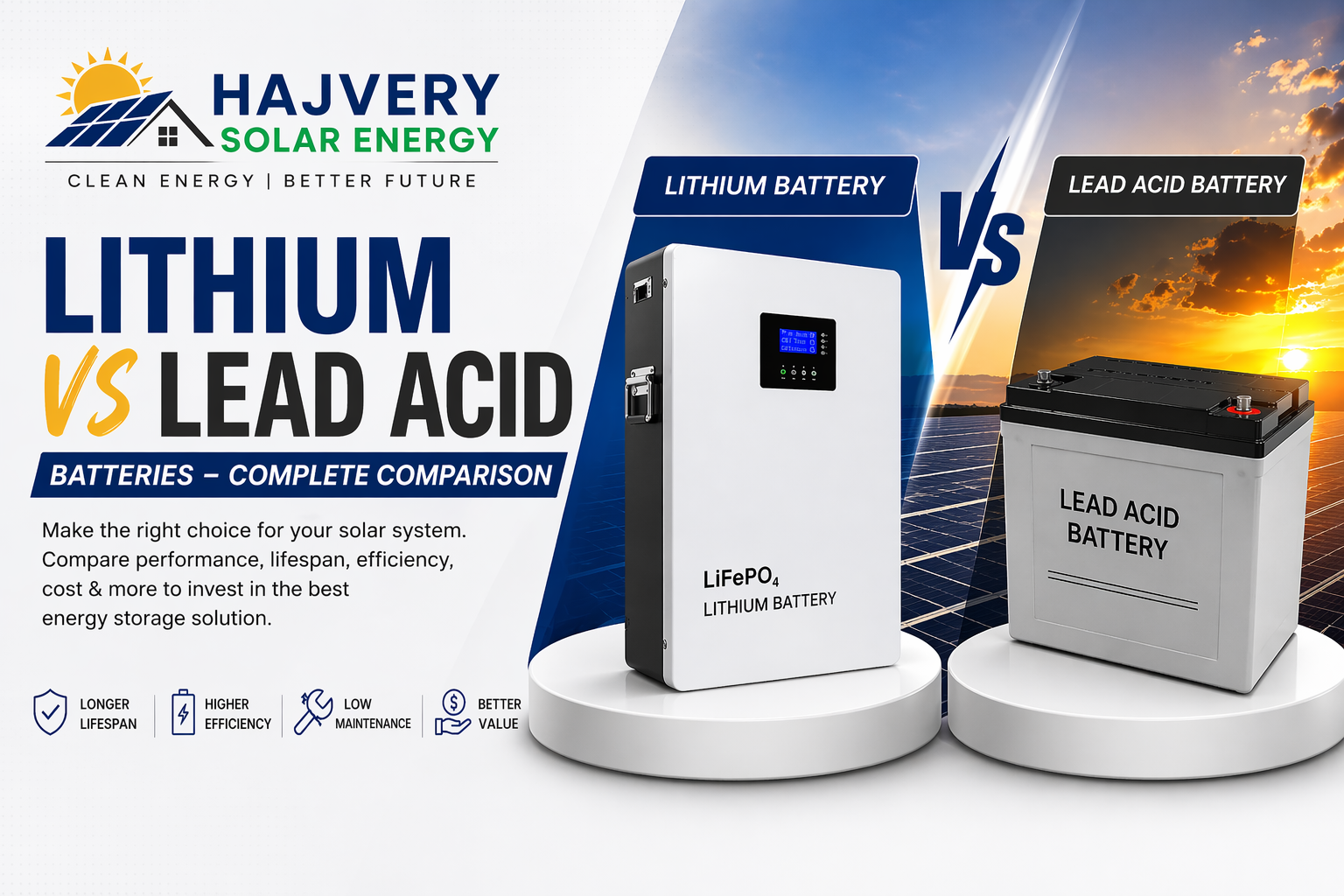
When choosing a battery for solar systems, UPS, or backup power, the two most commonly compared technologies are Lithium batteries and Lead Acid batteries. Both have been widely used in energy storage systems, but their performance, lifespan, efficiency, and long-term value are significantly different.
This detailed guide explains everything in a simple, user-focused way so you can make the right decision for your home, business, or solar installation. The information is based on industry knowledge, real-world performance, and modern energy storage standards followed in today’s solar market.
Understanding Lithium and Lead Acid Batteries
Lead Acid Batteries are the traditional energy storage solution that has been used for decades in UPS systems, vehicles, and basic solar setups. They are relatively affordable but require regular maintenance and have a shorter lifespan.
Lithium Batteries are the modern advanced solution used in high-efficiency solar systems. They are lightweight, long-lasting, and designed for deeper discharge cycles with minimal maintenance.
Key Differences Between Lithium and Lead Acid Batteries
1. Lifespan and Durability
Lead Acid batteries typically last between 2 to 4 years depending on usage and maintenance. Their performance gradually decreases over time.
Lithium batteries, on the other hand, can last 8 to 15 years, offering significantly higher durability and cycle life. This makes them a better long-term investment for solar energy systems.
2. Efficiency and Performance
Lead Acid batteries operate at around 70% to 80% efficiency. This means a portion of stored energy is lost during charging and discharging.
Lithium batteries offer 95% to 98% efficiency, ensuring almost all stored energy is usable. This makes them highly suitable for solar systems where energy optimization is critical.
3. Depth of Discharge (DoD)
Lead Acid batteries should ideally not be discharged below 50% to avoid damage and reduced lifespan.
Lithium batteries can safely discharge up to 90% to 100% without harming the battery. This allows more usable power from the same capacity.
4. Maintenance Requirements
Lead Acid batteries require regular maintenance, including water topping (in some types), cleaning, and monitoring.
Lithium batteries are maintenance-free, making them more convenient for residential and commercial users.
5. Charging Speed
Lead Acid batteries take longer to charge and are less efficient during partial charging cycles.
Lithium batteries charge much faster and are more compatible with solar energy fluctuations, making them ideal for modern solar setups.
6. Weight and Size
Lead Acid batteries are heavy and bulky, requiring more installation space.
Lithium batteries are lightweight and compact, making installation easier and more flexible.
7. Cost Comparison
Lead Acid batteries have a lower initial cost, making them attractive for budget users.
Lithium batteries have a higher upfront cost, but their long lifespan and efficiency make them more cost-effective over time.
Which Battery is Better for Solar Systems?
For short-term or low-budget backup needs, Lead Acid batteries may still be used. However, for modern solar systems, long-term savings, and high efficiency, Lithium batteries are clearly the superior choice.
They provide better performance, higher energy output, and reduced maintenance costs, making them ideal for residential, commercial, and industrial solar installations.
Expert Recommendation
At Hajvery Solar Energy, we recommend Lithium batteries for most solar applications due to their advanced technology, longer lifespan, and higher efficiency. As a trusted solar solutions provider, we ensure our customers get reliable and high-performance energy storage systems designed for long-term value.
Our experience in the solar industry shows that users who upgrade from Lead Acid to Lithium significantly reduce maintenance issues and improve overall system performance.
Conclusion
Lithium batteries outperform Lead Acid batteries in almost every important category including lifespan, efficiency, depth of discharge, and maintenance. While Lead Acid batteries may still serve basic needs, Lithium technology represents the future of energy storage.
If you are planning a solar installation or upgrading your existing system, choosing Lithium batteries is a smarter long-term investment.
 Crown
Crown FUJI
FUJI INVENT
 INVT (CHF)
 VEICHI
 EVE
EVE INVEREX