
Blog
Bio Gas Price in Pakistan 2026 – Plant Cost, Working, Benefits and Solar Comparison
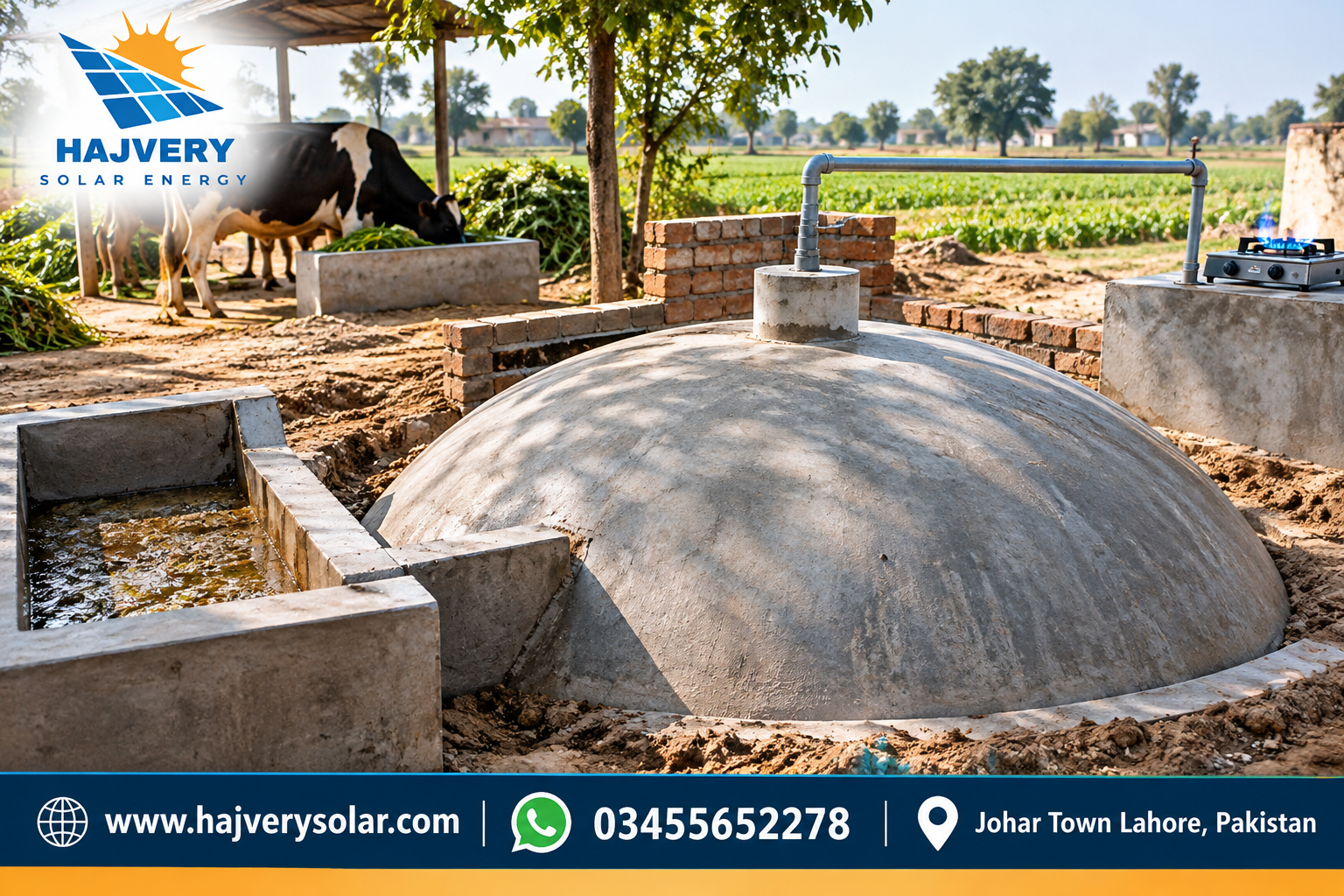
Pakistan is facing serious energy challenges. Rising electricity bills, expensive imported fuels and natural gas shortages have increased the demand for alternative energy sources. Solar energy is already helping thousands of households and businesses. However, another renewable energy source is also gaining attention: biogas.
Biogas is produced from organic waste, including animal dung, agricultural residues, food waste and sewage. It can provide fuel for cooking, heating and electricity generation. Moreover, the leftover material can be converted into organic fertiliser for agriculture.
Growing interest in renewable energy raises an important question: how much does a biogas plant cost, and is it a better investment than solar energy?
In this guide, we explain bio gas prices in Pakistan, different plant sizes, installation requirements, working principles, and the advantages and disadvantages. We also compare biogas with solar systems and discuss how this technology could reduce Pakistan’s dependence on imported LNG.
What Is Biogas and How Is It Produced?
Biogas is a renewable fuel produced when organic materials decompose without oxygen. This process is called anaerobic digestion.
The gas mainly contains methane and carbon dioxide. Methane is the component that produces energy when burned.
Common materials used to produce biogas include:
- Cow and buffalo dung.
- Poultry waste.
- Agricultural residues.
- Food and vegetable waste.
- Animal farm waste.
- Organic municipal waste.
- Sewage sludge.
Pakistan has considerable potential for this technology because agriculture and livestock farming generate large quantities of organic waste.
Instead of dumping this waste into open areas, farmers and firms can use it to produce energy.
What Does Biogas Contain?
The composition varies according to the feedstock and operating conditions.
| Component | Typical percentage |
| Methane (CH4) | 50–70% |
| Carbon dioxide (CO2) | 30–45% |
| Hydrogen sulphide | Small quantities |
| Water vapour | Variable |
| Other gases | Trace quantities |
Methane provides most of the fuel value. Therefore, higher methane concentrations generally produce better-quality biogas.
Bio Gas Price in Pakistan 2026
Installation cost depends on size, construction material, technology, and daily gas production capacity.
A small household digester is considerably cheaper than a commercial facility. Similarly, an industrial project requires additional equipment for gas purification, storage, compression and electricity generation.
The following table provides preliminary budgeting estimates for different plant categories in Pakistan.
Estimated Biogas Plant Installation Cost
| Plant category | Indicative estimated cost |
| Small household plant (2–4 m³/day) | Rs. 2–4 lakh |
| Household plant (6–10 m³/day) | Rs. 4–8 lakh |
| Medium farm plant (15–25 m³/day) | Rs. 8–20 lakh |
| Community plant | Rs. 20–60 lakh |
| Small commercial plant | Rs. 60 lakh–2 crore |
| Industrial biogas facility | Rs. 2–10 crore or more |
Important: These are indicative 2026 planning allowances, not verified supplier quotations or official government rates. Actual prices can differ substantially depending on civil construction, land, feedstock handling, gas purification, storage and generator capacity. Obtain a site-specific quotation before investing.
What Determines the Installation Cost?
Numerous factors affect the total investment.
1. Plant capacity
A plant designed to process 100 kg of dung daily will cost less than a facility processing several tonnes.
2. Construction material
Fixed-dome plants, floating-drum plants and prefabricated digesters have different construction costs.
3. Gas storage
A larger gas holder increases investment but helps manage differences between production and consumption.
4. Gas purification
Raw biogas contains moisture and hydrogen sulphide. Removing these impurities requires additional equipment.
5. Electricity generation
If you want to generate electricity, you will need a suitable biogas generator, electrical controls and supporting equipment.
6. Transportation and installation
The project location, availability of skilled workers, and equipment transport also affect the final price.
Types of Biogas Plants Available in Pakistan
Different technologies fit different users. Choosing the right design matters because an unsuitable plant may not produce enough gas for daily needs.
1. Fixed Dome Biogas Plant
A fixed-dome plant uses an underground masonry or concrete digester. Gas collects in the upper dome as organic material decomposes.
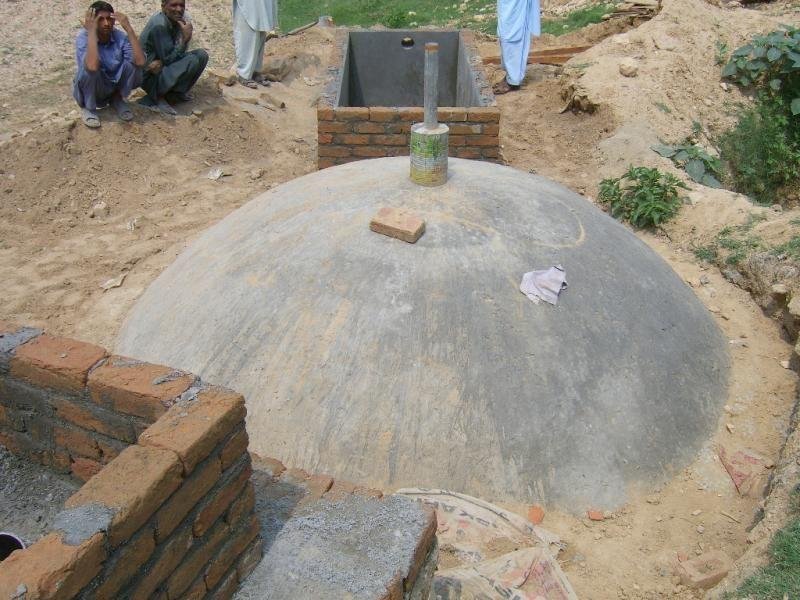
A fixed-dome biogas plant converts animal dung into renewable gas for household cooking.
Advantages:
- Long operating life when properly constructed.
- No moving gas-holder parts.
- Suitable for rural households.
- Relatively low maintenance requirements.
Disadvantages:
- Requires proper construction skills.
- Gas pressure can fluctuate.
- Poor construction quality can cause cracks and leaks.
2. Floating Drum Biogas Plant
This design uses a movable gas holder that rises as gas accumulates.
Advantages:
- Relatively consistent gas pressure.
- Easy to understand and operate.
- Gas storage is visible.
Disadvantages:
- Metal components may corrode.
- Requires regular maintenance.
- Usually costs more than a basic fixed-dome design.
3. Prefabricated Biogas Plant
Prefabricated plants use ready-made tanks or flexible digesters.
They suit smaller installations where fast construction matters.
However, buyers should check the material quality, expected operating life, temperature resistance and warranty before purchasing.
How Does a Biogas Plant Work?
Understanding the biogas plant working process helps buyers choose the right technology.
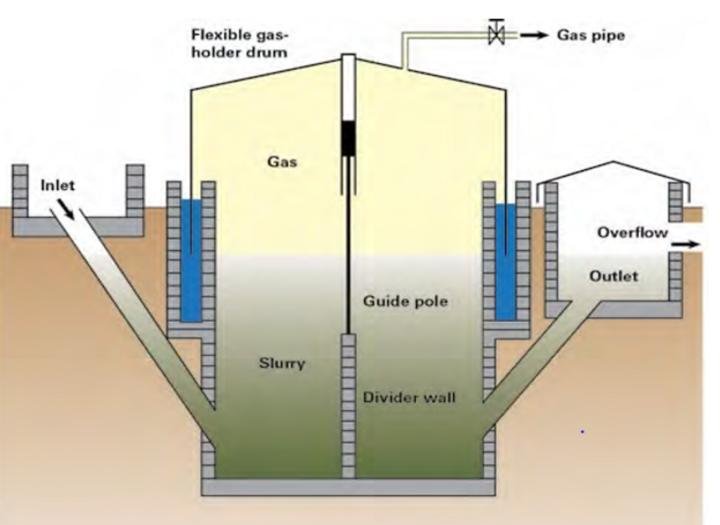
A typical system operates through several stages.
Stage 1: Collection of Organic Waste
The process starts with collecting cow dung, animal manure, food waste or other suitable organic materials.
The waste must be free from stones, plastic and other unwanted materials.
Stage 2: Mixing With Water
Animal dung is normally mixed with water to create a slurry.
The correct mixture depends on the feedstock and digester design.
Stage 3: Anaerobic Digestion
The slurry enters an airtight underground or above-ground tank.
Inside the tank, microorganisms break down organic material without oxygen.
This process gradually produces methane-rich biogas.
Stage 4: Gas Collection
The generated gas moves into a gas holder or storage chamber.
The gas can then be supplied to a suitable cooking burner, boiler or generator.
Stage 5: Gas Purification
For uses requiring better gas quality, the raw gas passes through purification equipment.
This equipment can remove:
- Hydrogen sulphide.
- Moisture.
- Unwanted particles.
- Carbon dioxide, where required.
Stage 6: Fertiliser Production
The remaining slurry is called digestate.
After suitable handling and treatment, it can be used as organic fertiliser, depending on its quality and applicable agricultural requirements.
Bio Gas Plant Diagram
A typical system follows this arrangement:
Organic waste → Mixing tank → Anaerobic digester → Gas holder → Gas purification → Cooking or electricity generation
The remaining digestate moves separately into a storage tank for further processing or agricultural use.
This simple arrangement explains the main stages of a biogas plant design.
What Is Required to Build a Biogas Plant?
Before construction, you should assess the availability of raw material and daily energy requirements.
A plant cannot operate productively without a consistent supply of organic waste.
Here are the main requirements.
1. Land and Suitable Location
The plant needs sufficient space for:
- Digester construction.
- Waste collection.
- Mixing tanks.
- Gas storage.
- Slurry storage.
- Equipment and maintenance access.
The location should also allow regular waste transportation.
2. Animal Dung or Organic Waste
A reliable feedstock supply is essential.
For example, a household plant may use dung from a small number of cattle. A commercial facility needs a much larger and more consistent supply.
3. Digester Tank
The digester is the main component.
It must be airtight and properly designed to maintain suitable conditions for anaerobic digestion.
4. Gas Storage System
The storage system collects the gas produced during digestion.
Its capacity must match the expected daily consumption.
5. Pipes and Valves
Gas pipelines connect the digester with the storage and consumption equipment.
Proper valves and safety devices are necessary to control pressure and prevent leakage.
6. Gas Purification Equipment
A purification system is particularly important for generators and commercial applications.
Hydrogen sulphide can cause corrosion and damage equipment.
7. Biogas Burner or Generator
For cooking, you need a compatible biogas burner.
For electricity generation, you need an appropriately rated biogas generator.
8. Skilled Installation Team
The construction team should understand digester design, gas pressure, pipe connections and safety requirements.
A poorly constructed plant can suffer from gas leakage, low production and operational problems.
Biogas Plant for Home: Is It Suitable for Pakistani Households?
A household plant can be a useful solution for rural families that own livestock.
Families with cows or buffaloes can collect daily dung and use it as feedstock.
A properly sized system can provide gas for cooking and other basic fuel requirements.
However, households without animals may find it difficult to arrange sufficient organic material.
How Much Dung Is Required?
The quantity depends on the plant capacity and the type of animal waste.
For example, a small household digester may require about 40–60 kg of fresh cattle dung daily, depending on its design and production target.
The dung is mixed with water before entering the digester.
Bio Gas Plant for Home Price
A small household installation may require an estimated investment of Rs. 2–4 lakh, while a larger household system may cost Rs. 4–8 lakh.
The final cost depends on construction quality, capacity and equipment.
Before installation, calculate:
- Daily cooking gas consumption.
- Available animal dung.
- Water availability.
- Required storage capacity.
- Maintenance requirements.
A plant should be sized according to actual feedstock availability, not just the household’s expected gas consumption.
Advantages of Biogas Energy
Biogas provides multiple advantages for households, farmers and industrial users.
1. Reduces Dependence on Imported Fuel
Pakistan spends considerable foreign exchange importing energy resources.
Locally produced biogas can replace some natural gas, LPG, and other conventional fuels.
2. Converts Waste Into Energy
Animal waste and organic garbage can create environmental problems when dumped improperly.
Biogas technology converts this waste into useful fuel.
3. Produces Organic Fertiliser
The remaining digestate can be processed into useful agricultural fertiliser.
This can reduce dependence on some chemical fertilisers.
4. Provides Energy Throughout the Day
Unlike solar panels, biogas production doesn’t depend directly on sunlight.
With adequate feedstock and proper storage, users can produce and consume gas day and night.
5. Supports Rural Communities
Farmers can use locally available waste to produce energy.
This can reduce household fuel expenses and create opportunities for small businesses.
6. Helps Improve Waste Management
Commercial plants can process large amounts of organic waste.
This reduces uncontrolled dumping and can improve sanitation around livestock farms and urban settlements.
7. Supports Electricity Generation
Biogas can operate specially designed generators.
Farms can use this electricity to support their operations, particularly where organic waste is readily available.
Disadvantages of Biogas Energy
Although it has benefits, biogas is not suitable for every household or business.
1. Requires Continuous Organic Waste
A biogas plant needs a regular supply of feedstock.
Without sufficient animal dung or organic waste, gas production declines.
2. High Initial Investment for Larger Plants
Commercial installations require digesters, storage systems, purification equipment and generators.
The initial investment can be substantial.
3. Routine Maintenance Is Necessary
Pipes, valves, filters and other equipment need inspection and maintenance.
Poor maintenance can reduce gas production and create safety problems.
4. Gas Production Depends on Temperature
Microorganisms work best within suitable temperature ranges.
Cold weather can slow down digestion and reduce gas production unless the plant has appropriate temperature management.
5. Requires Space
Large digesters need land for waste handling, storage and processing.
This makes installation difficult within densely inhabited urban areas.
6. Gas Quality Can Vary
The methane concentration depends on feedstock and operating conditions.
Raw biogas may contain impurities that damage generators and other equipment.
7. Safety Risks
Methane is flammable, while hydrogen sulphide can be toxic.
Proper ventilation, leak detection, pressure control and safe installation are essential.
Biogas vs Solar System: Which Is Better in Pakistan?
Pakistan has excellent solar energy potential. Solar panels are already widely used for residential, commercial and industrial electricity generation.
However, solar and biogas serve somewhat different purposes.
Solar panels convert sunlight into electricity, while biogas produces a combustible fuel from organic waste.
The following comparison explains the main differences.
Detailed Solar vs Biogas Comparison
| Feature | Biogas system | Solar system |
| Energy source | Organic waste | Sunlight |
| Main output | Gas and electricity | Electricity |
| Initial investment | Moderate to high | Low to moderate |
| Fuel requirement | Continuous organic waste | No purchased fuel |
| Daytime production | Yes | Yes |
| Night-time availability | With gas storage | With battery or grid |
| Weather dependency | Temperature affects production | Sunlight and weather affect production |
| Maintenance | Regular mechanical and biological management | Relatively low |
| Operating life | Design-dependent | Panels commonly last 25 years or more |
| Suitable locations | Farms and waste-producing facilities | Homes, factories and commercial buildings |
| Cooking fuel | Yes, with suitable equipment | Requires electric cooking appliances |
| Electricity generation | Requires a generator | Directly through inverter |
| Waste management | Excellent potential | Not applicable |
Solar System Installation Cost in Pakistan
Solar prices depend on panel brands, inverter models, batteries and installation requirements.
Indicative October 2026 market estimates are:
| Solar system | Estimated installed cost |
| 3 kW on-grid | Rs. 3.4–5 lakh |
| 5 kW on-grid | Rs. 5.5–8 lakh |
| 10 kW on-grid | Rs. 10–13 lakh |
| 5 kW hybrid with battery | Rs. 7.5–11.5 lakh |
| 10 kW hybrid with battery | Rs. 15–20 lakh |
These are approximate market ranges, not fixed quotations. Battery capacity and equipment quality can greatly change the final price.
For updated equipment options, visit Hajvery Solar Energy.
Which Technology Is More Efficient?
Solar panels convert sunlight directly into electricity.
Modern commercial solar modules commonly achieve approximately 20–24% module efficiency.
Biogas efficiency relies on the digestion process and the equipment used.
A biogas generator converts methane’s chemical energy into electricity. Its electrical efficiency is commonly around 25–40%, depending on generator technology and operating conditions.
However, you can’t compare these percentages directly.
Solar module efficiency measures how well a module converts sunlight into electricity. Biogas generator efficiency measures the conversion of fuel energy into electrical energy.
A biogas plant’s overall performance also depends on how much usable methane it produces from the available organic material.
Which Is More Reliable?
Solar systems produce electricity during daylight hours. Production falls during cloudy weather and stops at night.
A battery can provide backup after sunset, but it increases the investment.
Biogas can provide fuel at different times of the day if the plant receives sufficient waste and has adequate gas storage.
However, a poorly maintained digester can stop producing enough gas.
Therefore, reliability depends on the user’s circumstances.
For most urban homes, solar is generally more convenient. For livestock farms and agricultural businesses with continuous organic waste, biogas can be an attractive additional energy source.
Can Solar and Biogas Work Together?
Yes. In fact, combining these technologies can be an excellent solution.
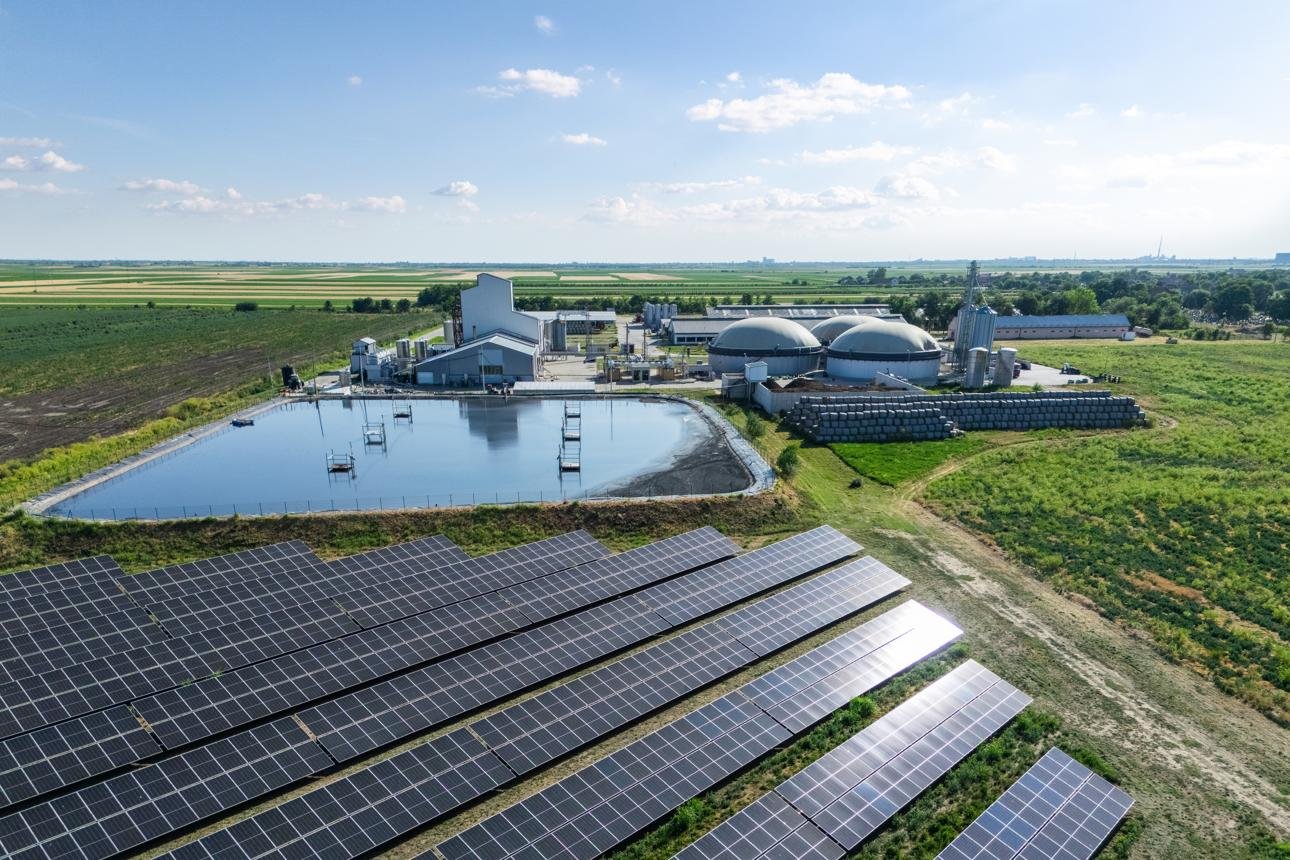
A solar system can provide daytime electricity for pumps, motors and other equipment.
A biogas plant can provide cooking fuel and electricity when solar generation is unavailable.
This combination can reduce dependence on the electricity grid, LPG and imported gas.
For a farm or industrial facility, a hybrid renewable energy arrangement may provide better energy security than relying on a single source.
Major Biogas Projects and Operating Plants in Pakistan
Pakistan already has several examples of biogas development.
These projects demonstrate how livestock waste and organic material can become useful energy.
1. Gujjar Colony Biogas Plant, Lahore
Gujjar Colony in Lahore is an important example of large-scale biogas development.
The area has a substantial dairy farming population, generating considerable quantities of animal waste.
The Punjab government developed a major project through the Punjab Power Development Company Limited.
The project was designed around a 12,000 cubic metre capacity, with an estimated project cost of Rs. 590 million in the published project information.
In May 2026, Business Recorder reported that the facility was expected to produce approximately 3,200 kg of fuel-grade gas daily.
The project also aims to convert organic waste into useful fertiliser.
2. Bagh Ibn-e-Qasim Biogas Plant, Karachi
Karachi has also started using organic waste for renewable energy.
The Sindh Solid Waste Management Board developed a biogas facility at Bagh Ibn-e-Qasim.
According to Radio Pakistan’s December 2025 report, the facility was designed to process approximately seven tonnes of livestock waste daily.
The initial supply was intended to serve around 70–80 nearby households.
The announced subsidised household rate was Rs. 2,000 per month.
The project also planned a later electricity-generation phase.
3. Pak Suzuki Biogas Plant, Karachi
Pak Suzuki Motor Company has introduced a biogas facility at its Karachi manufacturing plant.
According to Suzuki’s May 15, 2026 announcement, the plant has a capacity of 100 cubic metres of biogas per day.
It uses Napier grass and waste from the company’s cafeteria.
The company also commissioned a 920 kW solar power generation facility at the same manufacturing location.
This is an interesting example of combining solar and biogas technologies within an industrial operation.
4. Domestic Biogas Projects in Rural Pakistan
The Pakistan Domestic Biogas Programme, supported by the Rural Support Programmes Network, promoted household biogas installations in rural communities.
The programme helped develop local construction businesses, technical training and financing arrangements.
Its published programme information includes several household plant sizes, ranging from 4 to 25 cubic metres.
These installations demonstrate the potential of smaller systems for livestock-owning households.
Important: Project announcements, installed facilities, and fully operational commercial output are not always the same. Investors should verify current operating status and production figures before using any project as a financial benchmark.
Why Biogas Is Important for Pakistan as an LNG Alternative
Pakistan imports LNG to meet part of its natural gas demand.
International fuel prices, shipping costs, exchange rates and supply disruptions might create financial pressure.
This is why local energy production has become increasingly important.
Biogas offers an opportunity to produce some of the country’s fuel requirements domestically.
1. Reduces LNG Import Dependence
Pakistan has a large livestock sector.
Animal dung, agricultural residues and municipal organic waste can provide feedstock for biogas production.
If this resource is developed properly, it could replace some imported gas consumption.
2. Supports the Local Agricultural Economy
Farmers can supply organic waste to biogas facilities.
In return, they may receive additional income or access to lower-cost energy and fertiliser.
This creates an opportunity to connect the agricultural and energy sectors.
3. Produces Locally Available Fuel
LNG depends on international supply chains.
Biogas can be produced near farms, factories, and urban waste collection facilities.
This decreases transportation requirements for certain applications.
4. Can Be Upgraded to Biomethane
Raw biogas is not the same as pipeline-quality natural gas.
However, after removing carbon dioxide, hydrogen sulphide, moisture and other impurities, it can be upgraded into biomethane.
This higher-quality gas can potentially be compressed or supplied through suitable gas infrastructure, subject to technical criteria and regulatory approval.
5. Supports Energy Security
Local fuel production can reduce exposure to international price volatility.
It can also create employment in plant construction, equipment manufacturing, waste management and maintenance.
How Much Biogas Could Pakistan Produce?
An IEEFA report published in 2022 estimated approximately 600–1,200 million cubic feet per day of potential biogas production in areas with high biomass availability.
This is a theoretical resource estimate, not current production.
Actual output would depend on feedstock collection, project investment, technology, infrastructure and economic feasibility.
Therefore, biogas should be considered a complementary source of domestic gas rather than an immediate replacement for all LNG imports.
Is Biogas a Good Business Investment in Pakistan?
Biogas can create business opportunities for agricultural farms, dairy colonies, food processing facilities and waste management companies.
However, profitability depends on more than the quantity of gas produced.
Before starting a project, investors should evaluate the following:
- Availability and transportation cost of organic waste.
- Expected daily methane production.
- Electricity or gas consumption at the site.
- Cost of construction and machinery.
- Maintenance and operating expenses.
- Value of digestate as fertiliser.
- Potential customers for surplus gas or electricity.
- Environmental approvals and applicable regulations.
A dairy farm with thousands of animals may have a significant advantage because it has access to a consistent supply of feedstock.
In comparison, an investor who must purchase and transport organic waste may face higher operating costs.
A proper feasibility study should calculate the cost per cubic metre of usable gas or per unit of electricity generated.
Frequently Asked Questions
1. What is the cost of a small biogas plant in Pakistan?
A small household installation may cost about Rs. 2–4 lakh, depending on capacity, construction quality, and equipment. Larger household installations can cost more.
2. Can a biogas plant run a generator?
Yes. A suitable biogas generator can convert methane-rich gas into electricity. However, raw gas may require purification before it can be used safely and reliably.
3. How many animals are required for a household plant?
The number depends on the animals’ daily dung production and the plant’s capacity. A household system typically requires a regular supply of fresh animal dung.
4. Is biogas cheaper than solar energy?
There is no universal answer. Solar usually requires less daily maintenance and no organic feedstock. Biogas may be economical where waste is freely available, and there is a continuous requirement for cooking fuel or electricity.
5. Can biogas be used for cooking?
Yes. Biogas can be used in specially designed or compatible cooking burners. Gas pressure and quality must remain suitable for safe operation.
6. Can biogas replace natural gas in Pakistan?
Biogas can replace some natural gas consumption. However, widespread replacement would demand considerable investment in digesters, purification, gas storage, distribution and regulatory infrastructure.
7. Does a biogas plant produce fertiliser?
Yes. The remaining digested material can be processed and used as organic fertiliser, subject to appropriate treatment and quality checks.
8. Does a biogas plant work in winter?
Yes, but low temperatures can slow digestion. Proper insulation, digester design, and temperature management can help maintain production.
9. What is the lifespan of a biogas plant?
A properly constructed fixed-dome plant can operate for many years. Its actual lifespan depends on construction quality, maintenance and operating conditions.
10. Is biogas better than solar for farms?
Both technologies have different advantages. Solar is excellent for electricity generation, while biogas is useful where farms have large quantities of organic waste. Combining both can provide a more flexible energy solution.
Conclusion: Can Biogas Become a Major Energy Source in Pakistan?
Biogas has considerable potential in Pakistan because of the country’s livestock, agriculture and organic waste resources.
It can provide cooking fuel, generate electricity, improve waste management and produce useful agricultural fertiliser.
However, successful development requires proper plant design, consistent feedstock, technical expertise and long-term maintenance.
Solar energy is still a practical option for most homes and businesses because it operates relatively simply and requires little maintenance.
Biogas is especially appealing to dairy farms, agricultural businesses, food processing industries and locations with large quantities of organic waste.
Rather than treating solar and biogas as competing technologies, Pakistan should develop both. Together, they can reduce dependence on foreign fuels, improve energy security, and support a more sustainable economy.
For businesses and households looking to reduce electricity costs, solar energy is already a practical investment, while biogas offers another opportunity for users with suitable organic waste resources.
References and Further Reading
- Rural Support Programmes Network – Pakistan Domestic Biogas Programme
- Business Recorder – Lahore Biogas Plant and Fuel-Grade Gas Production
- Radio Pakistan – Karachi Biogas Project
- Global Suzuki – Pak Suzuki Biogas and Solar Facilities
- IEEFA – Rising LNG Dependence in Pakistan
- Scientific Study – Biogas and Household Energy Costs in Pakistan
 Crown
 FUJI
 INVENT
 INVT (CHF)
 VEICHI
 EVE
 INVEREX