
Blog
Bifacial vs Monofacial Solar Panels – Which is Better?
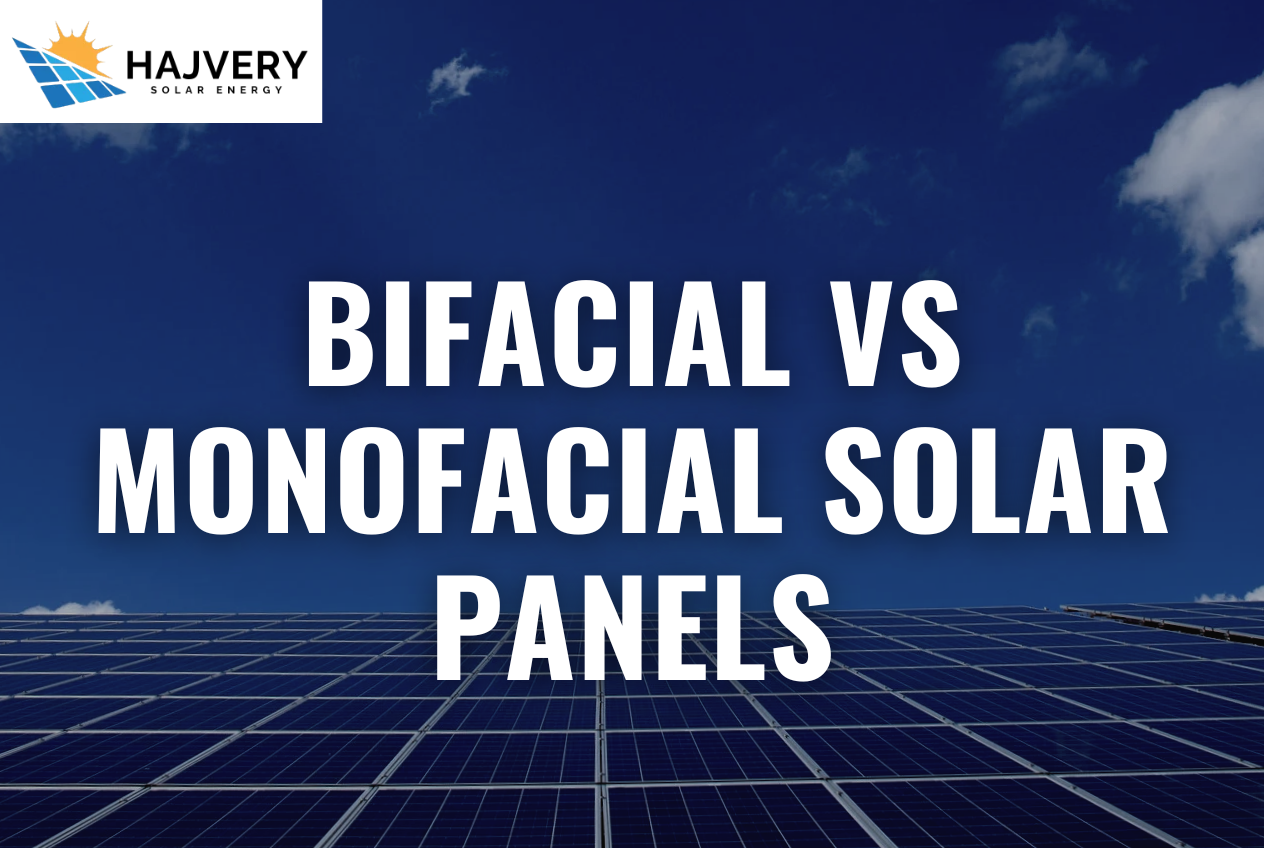
When choosing solar panels for your home, business, or industrial project, one of the most common questions is: Bifacial vs Monofacial solar panels – which is better?
Both technologies are widely used in modern solar systems, but they work differently and perform best in different conditions. In this guide, we’ll break everything down in simple, practical language so you can make the right decision for your energy needs.
This guide is brought to you by Hajvery Solar, helping you choose smarter and more efficient solar solutions.
What Are Monofacial Solar Panels?
Monofacial solar panels are the traditional and most commonly used solar panels. They capture sunlight from only one side — the front surface.
How they work:
- Sunlight hits the front of the panel
- Silicon cells convert sunlight into electricity
- Back side remains inactive
Key features:
- Standard design
- Lower cost
- Easy installation
- Works well on rooftops
Best for:
- Residential rooftops
- Areas with limited space
- Budget-friendly solar systems
Monofacial panels are reliable, stable, and widely available, making them a popular choice for homeowners in Pakistan.
What Are Bifacial Solar Panels?
Bifacial solar panels are advanced solar modules that generate electricity from both front and back sides.
How they work:
- Front side captures direct sunlight
- Back side captures reflected sunlight (from ground, roof, or surrounding surfaces)
- Extra energy generation increases total output
Key features:
- Dual-sided energy production
- Higher efficiency potential
- Better performance in reflective environments
- Modern solar technology
Best for:
- Ground-mounted solar systems
- Commercial and industrial projects
- White or reflective rooftops
- Open areas with sunlight reflection
Bifacial vs Monofacial – Key Differences
Here is a simple comparison to help you understand both technologies clearly:
1. Energy Production
- Monofacial: Generates power from one side only
- Bifacial: Generates power from both sides (up to 5%–30% extra energy depending on conditions)
2. Efficiency
- Monofacial: Standard efficiency
- Bifacial: Higher overall energy yield
3. Cost
- Monofacial: More affordable
- Bifacial: Slightly expensive upfront
4. Installation Requirements
- Monofacial: Flexible installation, works on any rooftop
- Bifacial: Needs spacing and reflective surface for maximum output
5. Durability
- Both types are durable, but bifacial panels often come with glass-glass construction, making them more robust.
6. Space Efficiency
- Monofacial: Requires more panels for same output
- Bifacial: Produces more energy per panel in ideal conditions
Advantages of Monofacial Solar Panels
Monofacial panels are still widely used because they offer:
✔ Lower initial investment
✔ Easy installation and maintenance
✔ Reliable performance in all weather conditions
✔ Suitable for most residential systems
✔ Proven long-term technology
If you want a simple, cost-effective solar solution, monofacial is a solid choice.
Advantages of Bifacial Solar Panels
Bifacial technology is becoming more popular due to its high performance:
✔ Higher energy generation
✔ Better ROI in long term
✔ Works well with reflective surfaces
✔ Ideal for large-scale solar farms
✔ Advanced and future-ready technology
If your goal is maximum energy output and long-term savings, bifacial panels are highly effective.
Which One Should You Choose?
The right choice depends on your usage, budget, and installation environment.
Choose Monofacial Panels if:
- You have a residential rooftop system
- Your budget is limited
- You want simple installation
- You don’t have reflective surfaces
Choose Bifacial Panels if:
- You want higher energy production
- You are installing a commercial or industrial system
- You have open space or ground-mounted setup
- You want better long-term ROI
Real-World Performance (Important Insight)
Many users assume bifacial panels always produce significantly more energy. That is true — but only under the right conditions.
Bifacial performs best when:
- Panels are elevated from the ground
- Surface below is reflective (white concrete, sand, or gravel)
- Proper tilt and spacing are maintained
If installed on a dark rooftop:
The gain may be lower, sometimes only 5%–10% more than monofacial.
Cost vs Return on Investment (ROI)
- Monofacial systems: Lower upfront cost, steady savings
- Bifacial systems: Higher upfront cost, but greater long-term savings
Over 20–25 years, bifacial systems can often generate more total electricity, especially in commercial setups.
Environmental Impact
Both technologies are environmentally friendly, but bifacial panels contribute slightly more to sustainability because:
- They generate more energy per panel
- Reduce land usage for same output
- Improve overall solar efficiency
Expert Recommendation from Hajvery Solar
At Hajvery Solar, we always recommend choosing based on real conditions rather than trends.
✔ For homes in Pakistan: Monofacial is often the most practical and cost-effective
✔ For businesses and large projects: Bifacial can deliver superior long-term value
The best solar system is not the most expensive — it is the one that fits your energy needs perfectly.
Final Verdict: Bifacial vs Monofacial – Which is Better?
There is no single winner. Both are excellent technologies.
- Monofacial = Affordable, reliable, simple
- Bifacial = High efficiency, advanced, long-term savings
If you want a budget-friendly and stable solution, go with monofacial.
If you want maximum energy output and future-ready performance, bifacial is the better choice.
Conclusion
Choosing between bifacial and monofacial solar panels depends on your goals, location, and budget. Understanding the difference helps you avoid overpaying or underperforming solar systems.
For expert solar consultation, installation, and customized system design in Pakistan, Hajvery Solar is here to help you make the right decision with confidence.
 Crown
Crown FUJI
FUJI INVENT
 INVT (CHF)
 VEICHI
 EVE
EVE INVEREX